Rough Patch or Time to Break Up? How to Tell the Difference
We make BeSeen, a couple mood journal, and mention it where it fits. How we research and write

A rough patch is a hard stretch in a relationship that both of you still want to come out of; an ending is when one or both of you no longer want to repair it, or when contempt or fear has replaced frustration. The question that separates them is not “are we happy right now?” but “when it gets hard, do we still turn toward each other?”. And if you honestly cannot tell, you do not have to decide this week. There is a third option between staying as you are and breaking up, and most couples skip it.
This guide covers the signals that tell the two apart, six questions to ask yourself, how to run a real trial period, and why the weeks before the holidays are a hard time to make the call. If you are afraid of your partner, skip to the section on abuse; the rest of this page is not written for that situation.
Rough patch or ending: the signals side by side#
No single sign settles it. Read across the rows and notice which column most of your answers fall into.
Sounds like a rough patch
Sounds like an ending
The problem has a start date, and something else changed around then: a new job, a move, a baby, grief, the distance.
You cannot remember when it started, because it is about who you each are, not what is happening to you.
Fights are about the thing, and you can still laugh about something else the same evening.
Fights are about the person. Eye-rolling, mockery and disgust have crept in.
After a fight, one of you reaches back, and the other takes the hand.
Repair attempts are ignored, or nobody bothers to make them any more.
If it got better, you would both want it.
One of you feels relief, not loss, when you picture it being over.
You still talk about next summer, next year, next visit.
Plans past the next few weeks feel like something to avoid.
Why it is so hard to tell from the inside#
Three things blur the picture. First, memory is unfair: the worst fight of the month is vivid, and the ordinary Tuesday where things were fine is gone by Thursday. You end up judging the relationship on its lowest points. Second, outside stress hides in plain sight. A new job, a sick parent, a move, a long stretch of living apart: any of these can make two people short-tempered and distant, and it is easy to blame the person in front of you rather than the conditions you are both in.
Third, you are rarely deciding at the same speed. One of you has often been quietly unhappy for months before saying anything, while the other is hearing it for the first time. The first person is at the end of a long private process. The second is at the start of it. That gap alone can make a rough patch feel like an ending to one of you and a surprise to the other.
Six questions that separate the two#
Answer these on your own first, honestly, before you talk about them together.
- Is this about what is happening to us, or about who we are? Stress from outside the relationship, like money, illness, a move, or a long stretch apart, can look exactly like a relationship problem. If the trouble started when the stress did, fix the conditions before you judge the relationship.
- Can we still talk about the hard thing, even if we cannot solve it? Every couple has problems they will never fully solve. What matters is whether you can discuss them without it turning into the same fight on repeat.
- Is there contempt? Frustration says “you forgot again.” Contempt says “of course you forgot, you always do, that is who you are,” with an eye-roll. It is the sign most worth taking seriously.
- Do we still repair? A joke, a hand on the arm, “can we start that again?”. Rough patches still have repair in them. Endings usually do not, or one person has stopped accepting it.
- Have I actually said it, in plain words? Many people decide to leave over something their partner has never clearly heard. Hints, sighs and slammed cupboards are not the same as “I am unhappy, and I am scared about us.”
- If it got better, would I want it? This is the question under all the others. Wanting the relationship but not the way it is now points to a rough patch. Not wanting it even at its best points somewhere else.
Two of these have research behind them. On the second: the Gottman Institute estimates that 69% of relationship conflict is about perpetual problems, differences in personality or needs that never fully go away, and that what matters is whether a couple can keep a dialogue about them going instead of getting stuck (The Gottman Institute). An unsolved problem is normal. A problem you can no longer discuss is the warning sign. On the third: from four decades of research on couples, John Gottman names contempt as the single strongest predictor of divorce (The Gottman Institute). If eye-rolls and mockery have become normal between you, name it and treat it as urgent, whichever way you go.
The option most couples skip: a trial with a deadline#
Most people frame this as a two-way choice: stay as you are, or break up. Therapist William Doherty and colleagues at the University of Minnesota built a short form of counseling, called discernment counseling, around a third path. A couple chooses between keeping things as they are, separating, or committing to six months of couples therapy with breaking up taken off the table, and deciding at the end, having made a full effort. In their analysis of 100 consecutive couples where one partner was leaning toward divorce, about half chose to start couples therapy to try to reconcile (Doherty, Harris and Wilde, Journal of Marital and Family Therapy). Those were couples who sought help, so it is not a prediction for yours. It does show that “not sure” is a real position with a real way forward.
You can borrow the structure even without a counselor. The point is to swap a vague, open-ended “we should work on things” for a commitment with edges.
Name it
“I am not okay with how things are, and I am not ready to give up. Can we really try, for a set time, and then decide?”
Set the window
Long enough for change to show: weeks, not days. Put the end date in both calendars.
Define trying
Concrete and visible: a weekly talk, one evening a week without phones, counseling, whatever the problem actually needs.
Agree how you will judge it
Before you start, say what “better” would look like to each of you, so the end of the window is a review, not another fight.
Then hold a short weekly talk during the window: what went well, what did not, one thing to try next week. Our weekly relationship check-in has a format, and the guide to talking about feelings without it turning into a fight helps when those talks get heated.
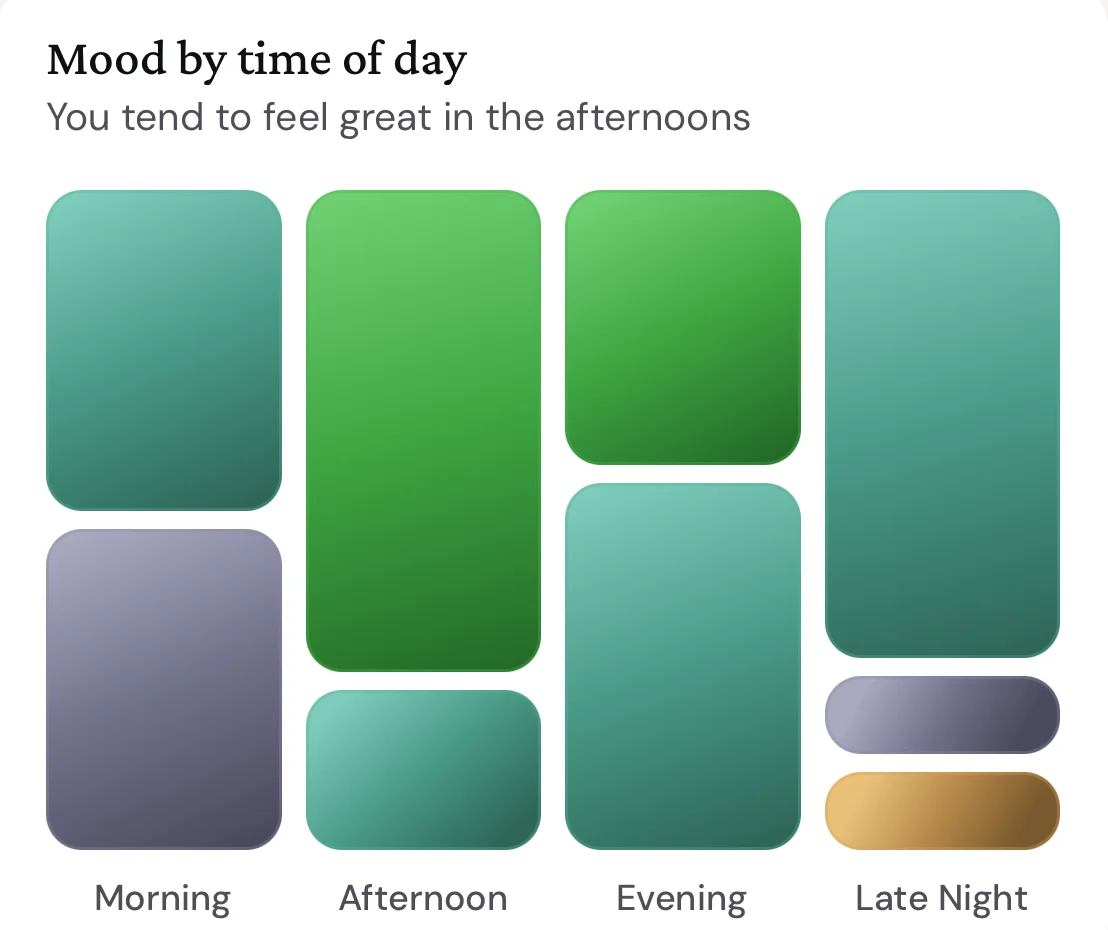
Because memory is unfair, keep a record during the trial. A mood and one line a day, for each of you, is enough. At the end of the window you can look at what the weeks were actually like, not just how the worst night felt.
In BeSeen
Judge the weeks, not the worst night
In BeSeen, a check-in is a mood and the feelings behind it in about thirty seconds, and the app shows your mood trends and a weekly recap. You choose for every check-in how much your partner sees: just the mood, a summary, or everything. It cannot tell you whether to stay. It can show you whether things are moving. The solo journal needs no account; partner features need one.
Try it free on iPhoneWhen one of you is leaning out#
Often one partner wants out and the other wants to fight for it. That split is common: in a survey of about 2,500 divorcing parents, about 1 in 4 said they believed their marriage could still be saved, and interest in reconciling was far higher among people whose spouse had started the divorce (Doherty, Willoughby and Peterson, Family Court Review, 2011). Those were married parents already in the divorce process, but the pattern is familiar to anyone in a relationship: the person who did not see it coming is usually the one who wants to try.
If you are leaning out, say so plainly rather than drifting. Ambivalence is honest; a slow fade is not. Tell your partner what you have been feeling, how long, and what, if anything, would make you want to try. Then be honest with yourself about whether you have given them a real chance to hear it.
If you are leaning in, the urge is to pursue: more texts, more talks, more promises. In discernment counseling, Doherty and colleagues help leaning-in partners avoid pursuing, pleading and scolding, because showing more distress that way tends to push the other person further away. Listen to what they are actually saying about the relationship, even when it is hard to hear, and show change rather than describing it.
Deciding before the holidays#
There is a name for the breakup that happens around a holiday visit home: the “turkey drop”. The phrase comes from US college students in their first year who end a long-distance relationship with a high-school partner over Thanksgiving, a pattern researchers note is known mostly from the popular press (Emerging Adulthood, 2017). The wider pressure is not only American. Late in the year, the calendar starts asking questions out loud: whose family for the holidays, whether to buy the plane ticket, what to tell the relatives who ask “so, any news?”.
That pressure is real, but the deadline is mostly invented. Two rules help. If you have decided, do not stretch it out for the photos or the trip; weeks of pretending are harder on both of you than a clear, kind conversation. If you have not decided, do not let the calendar decide for you. Agree on a date in January to talk properly, keep joint plans light, agree on what you will tell family (“nothing yet” is a complete answer), and get through the season without making the biggest choice of your year in a relative’s spare room.
Long-distance couples feel this most. The holiday visit is often the first long stretch together in months, and it carries more weight than any one visit should. If your rough patch is really about the distance itself, the most useful conversation is usually about the plan to close it, not about the relationship. Our guides to surviving the holidays as a couple and the days after a visit cover the season itself.
When it is not a rough patch: abuse#
Everything above assumes two people who are unhappy but safe. If your partner hits, threatens, or frightens you; controls your money, your phone, or who you see; or makes you afraid to disagree, that is not a rough patch, and it is not something a trial period or a better conversation can fix. The National Domestic Violence Hotline does not recommend couples counseling with an abusive partner, because abuse is not a relationship problem and what is said in a session can be used against you later (The Hotline).
In the US, you can reach The Hotline 24 hours a day at 800-799-7233, by texting START to 88788, or by live chat at thehotline.org. Advocates can help you work out whether what is happening is abuse and how to plan for your safety, including around leaving. If you think your phone or browser is being monitored, The Hotline suggests calling rather than browsing. Outside the US, contact your national domestic abuse helpline. If you are in immediate danger anywhere, call your local emergency number.
Common questions#
How do you know if it's a rough patch or the end of a relationship?
A rough patch usually has a cause you can point to, still has repair in it after fights, and both of you would want the relationship if it got better. It looks more like an ending when contempt has replaced frustration, repair attempts are ignored, the problem is about who you each are rather than what is happening to you, or one of you feels relief at the thought of it being over.
How long do rough patches in a relationship last?
There is no standard length. A rough patch tied to an outside stress, like a new baby, a job loss or a stretch of distance, often eases as that stress does. More useful than counting weeks is checking direction: are the good days becoming more frequent, and are fights getting repaired faster? If neither is moving after a real, agreed effort, that is information.
Is it normal to have a rough patch in a relationship?
Yes. Long relationships go through hard stretches, and every couple has some problems that never fully go away. The Gottman Institute estimates that 69% of relationship conflict is about these ongoing, unsolvable differences. A rough patch is not a sign you chose wrong; how you handle it matters more than whether you have one.
Should I break up before the holidays?
If you have already decided, do not drag it out for the sake of family photos or a trip; a clear, kind ending is better than weeks of pretending. If you have not decided, do not let the calendar decide for you. Agree on a later date to talk properly, keep joint commitments light, and get through the season without making the choice under pressure.
Can counseling help if one of us wants to break up and the other doesn't?
Yes, and there is a format built for exactly that. Discernment counseling, developed by William Doherty at the University of Minnesota, is short and aimed at clarity rather than fixing things: it helps a couple decide between keeping things as they are, separating, or committing to a set period of couples therapy. It is not suitable if there is abuse in the relationship.
See how the weeks actually go, together, before you decide.
BeSeen is a couple mood journal for iPhone. Free to try; partner features need an account.
Get BeSeen on the App Store